CZAS PRZECZYTANIA TEKSTU: 9 minut(y) / READING TIME: 9 minutes
I am pleased to invite you to the first review of international academic journals in the fields of constitutional law and political science that focus on monarchy and related topics. Although articles on these subjects are relatively rare, in recent years there has been a noticeable increase in scholarly interest in issues concerning monarchy, as well as, to a lesser extent, related themes such as nobility, heraldry, and similar areas. I have decided to present an annual review of publications on these topics, selecting those that, in my opinion, are most noteworthy. Since several intriguing articles were published last year, this inaugural installment covers the final months of 2017.
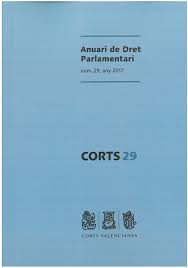
In the latest issue of „ANUARIO DE DERECHO PARLAMENTARIO” (No. 29/2017), there is an article by two Spanish constitutional scholars titled “De Juan Carlos I a Felipe VI: ¿Algo nuevo bajo el sol?”, which translates to “From Juan Carlos I to Felipe VI: Anything New Under the Sun?”. In addition to summarizing the 40-year reign of King Juan Carlos I—divided by the authors into three main phases—, which ended in an unusual manner in 2014 with the monarch’s abdication, the article also explores selected contemporary constitutional issues concerning the modern Spanish monarchy.Among the topics discussed in the article are the status and future prospects of Spain’s new king, the permissible scope of criticism of the monarch and monarchy (examined in comparison with relevant provisions of Spanish and international human rights law, including freedom of expression), the institution of abdication and its course in 2014, the compatibility of the rules of succession—which favor male heirs over female ones—with the constitutional principle of equality before the law and human rights conventions, as well as the legal status of the former king and his consort (in particular, whether they still enjoy the privilege of immunity, and if not, whether the king could be held accountable for actions committed while in office). The authors also attempt to answer the question of whether the accession of the new Spanish monarch, Felipe VI, signifies a noticeable change for the Spanish monarchy, or whether, after a brief novelty effect, the new monarch will ultimately continue the policies and governing style of his father.
It turns out that the accession of Felipe VI—who is the first hereditary king of Spain since the restoration of the monarchy in 1975 (Juan Carlos I became king by decision of Francisco Franco, despite his father, the Count of Barcelona, being first in the line of succession)—is not universally seen as self-evident. Some voices argue that since the 1978 Constitution, which established the monarchy, was in a sense imposed (Spaniards were given a choice between monarchy or dictatorship), Felipe VI’s accession should have been confirmed by the will of the people expressed through a referendum.
The authors interpret the constitutional position of the king and his legal status, aligning themselves with the segment of Spanish legal doctrine that asserts the complete lack of authoritative powers vested in the monarch. They preemptively cite various high-profile cases where contemporary monarchs attempted to make independent political decisions against the will of the government, emphasizing that the King of Spain has no such capacity (e.g., refusing to grant royal assent to a law, similar to the so-called monarchs’ rebellion in Belgium or Luxembourg). They stress that without government approval, the king cannot even deliver a speech or embark on an official foreign visit. The king, when acting, is entirely dependent on government consent. The authors reference the conservative politician Esteban González Pons, who compared the significance of the king to that of the Spanish flag.
The article also contains reflections on the first abdication of a monarch under the 1978 Constitution and the unique legal status of the organic law governing abdication. Its passage led some scholars to conclude that abdication in Spain has ceased to be an independent act of the king but is instead co-determined by the legislature. The monarchy in Spain has become fully integrated with democracy. However, the authors note that the actions of the parliament and government in response to the abdication showed signs of significant haste, which may suggest surprise at the king’s decision and his leading role in the process. The Organic Law on Abdication and the amendment of the 1987 decree on the titles and honors of the Royal Family and the Regent were adopted with remarkable speed, practically without parliamentary debate. The organic law on abdication was not a mere automatic approval of the king’s independent decision. But was it an expression of consent to abdication? If so, could parliament theoretically have refused to consent to the monarch’s abdication? The authors ultimately consider such a scenario highly unlikely.
In the section discussing the future of the Spanish monarchy, the authors argue that Felipe VI assumed the throne at a relatively favorable moment, when several factors strengthened the monarchy—such as the crisis of national unity, the highly negative public perception of King Juan Carlos I, and Felipe’s determined efforts to improve the monarchy’s image by emphasizing modesty and financial prudence, as well as his decision to distance himself from his sister, who was implicated in a financial scandal, by stripping her of her aristocratic title. The authors predict the eventual end of the Spanish monarchy and its dissolution as an outdated institution, increasingly rare in Europe. Only time will tell whether they were right.
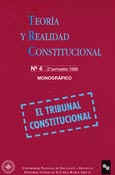
In the latest issue of another Spanish journal specializing in constitutional law and constitutional theory, „TEORÍA Y REALIDAD CONSTITUCIONAL” (No. 40/2017), affiliated with Spain’s largest public university, UNED, a scholarly article titled “La Corona y la propuesta de candidato a Presidente del Gobierno: nuevas prácticas y viejas normas” was published.
The author, José María Porras Ramírez, a constitutional scholar from the University of Granada, critically examines the arguments put forward by proponents of assigning the king an active role in the process of appointing the prime minister and government. Such a role is still exercised today by a few monarchs operating within semi-constitutional monarchies. However, Porras Ramírez argues that the Spanish king no longer holds such a prerogative, which, in his view, was a deliberate choice made by the drafters of the 1978 Spanish Constitution.
The article refers to the turbulent history of the Spanish monarchy, which, according to the author, was largely responsible for its own downfall due to the excessive activism of monarchs, who frequently sought additional powers and ultimately abused them. The current constitutional model in Spain envisions a passive monarchy, where the king serves solely as the representative of the state, merely announcing political decisions without taking an active role in making them.
According to the author, Spanish democracy is now mature and does not require a moderator or arbitrator in the person of the king, who, not being democratically elected, lacks the legitimacy to perform such a function. The only role assigned to the monarch in situations where a government cannot be formed and there is a confirmed deadlock in achieving political consensus is to dissolve parliament and call new elections to establish a new legislative assembly. The government formation process would then restart following the electoral outcome, in accordance with democratic procedures.
Porras Ramírez appears to suggest that any political activism by the monarch would be detrimental rather than beneficial, both for the preservation of the monarchy’s function and its continued existence.
Through this article, readers gain several valuable insights into the practical developments that have emerged from the highly general constitutional provisions concerning the process of government formation in Spain. One such example is the customary principle that the king informs parliament about the detailed schedule of his meetings with representatives of different parliamentary factions and that these meetings occur in an ascending order, from the smallest to the largest party in terms of parliamentary seats. Additionally, it has become customary for the king, on his own initiative, to also meet with individuals outside the core group of parliamentary representatives to broaden his understanding of the political situation.
The constitution does not set a specific deadline for completing discussions over the prime ministerial candidacy, as their purpose is to form a stable government. However, in practice, the timeframes are calculated from the king’s first proposal of a candidate for prime minister. Talks typically commence immediately after the election results are announced and continue until the convening of the first session of the Cortes, which must take place within 25 days after the elections. It has become an established practice that each meeting lasts approximately two to four hours.
The king is explicitly prohibited from favoring or promoting any particular candidate in discussions, even if he personally views them as an ideal choice for prime minister. The author emphasizes the sharp contrast between this Spanish practice and the active role played by some monarchs or presidents in republics. This positions the King of Spain closer to the role of the German President, rather than the more interventionist monarchs of Belgium or the Netherlands, who play a more active role in government formation. The Spanish king merely nominates a candidate to parliament, and appoints them only if they secure a vote of confidence. Only after this parliamentary decision is the prime minister formally confirmed.
In practice, selecting a candidate for prime minister is only the beginning of difficult negotiations regarding the composition of the government. In the past, there have been instances where the President of the Congress of Deputies postponed the vote of confidence to allow the prime ministerial candidate to form a government with a better chance of securing parliamentary approval.
A potential turning point for Spain’s constitutional practice came in the wake of the political crisis that resulted from the inability to form a government after the 2015 elections. Those who had hoped that, in such a crisis, the king could act as a “reserve power” to reinforce his constitutional role saw their hopes dashed by the monarch himself. Felipe VI immediately initiated the parliamentary process of forming a government, despite knowing it had no realistic chance of success. This ultimately led to snap elections, with the king explicitly stating that, in accordance with the constitution, it is parliament—not the monarch—that decides on the appointment of the prime minister.
Since the constitution does not specify a deadline for consultations regarding the first prime ministerial candidate after an election, the king could have extended the negotiations, at least in an attempt to facilitate the formation of a stable coalition. However, he chose not to do so, which set a crucial constitutional precedent and confirmed the monarch’s weak institutional position in Spain’s political system.
The author highlights an important constitutional constraint on the king’s role. Under Spanish law, the king does not have full discretion in nominating a candidate for prime minister—his nomination requires the countersignature of the President of the Congress of Deputies. This means that if the king’s nomination conflicted with the parliamentary majority’s expressed preference, the President of the Congress could refuse to countersign it, thereby blocking the nomination.
The author further suggests an alternative possibility—that the king could have extended negotiations, in accordance with the constitution, if there was a reasonable prospect of a positive outcome. However, this did not happen—Felipe VI deliberately chose not to pursue this path.
This leads the author to question whether Spain should consider stripping the king of his role in prime ministerial consultations, similar to Sweden and Japan, where monarchs no longer perform this function. While in 1978, during Spain’s transition from authoritarian rule to democracy, this role may have been necessary for stability, today, it appears less justified—especially in light of the king’s own actions.
However, the author ultimately softens his stance, stopping short of a definitive conclusion. He acknowledges that having a neutral, non-activist institution overseeing consultations has certain advantages. At the same time, he does not hide the fact that the current procedure for government formation in Spain is not without flaws.
The article proposes concrete, minor modifications and even suggests that moderation powers should be granted to a single institution. However, the author does not advocate for this role to be given to the king. Instead, he sees the President of the Congress of Deputies as the appropriate figure, given that it is the parliament’s vote of confidence that ultimately determines the survival of the government.
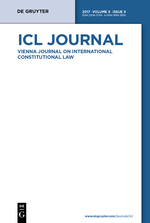
The latest issue of the „VIENNA JOURNAL ON INTERNATIONAL CONSTITUTIONAL LAW” (Volume 11, Issue 4) features an article addressing a fascinating and rarely discussed topic—noble surnames. The authors of the article, “What’s in a Name? Equal Treatment, Union Citizens, and National Rules on Names and Titles”, highlight that although European law does not regulate noble names and titles, the Court of Justice of the European Union (CJEU) has nevertheless been called upon to adjudicate this matter in cases where national regulations on this issue had to be examined for their compliance with the EU principles of equal treatment, European citizenship, and freedom of movement and establishment.
On the one hand, the issue of names and titles falls within the sovereign competence of EU Member States. On the other hand, these states must still respect EU fundamental principles. The CJEU has ruled on such matters in several notable cases, including Garcia-Avello, Grunkin and Paul, Sayn-Wittgenstein, and Runević-Vardyn and Wardyn.
The most recent ruling in this area concerns the case of Nabiel Bogendorff von Wolffersdorff (C-438/14), which is analyzed in the article. In this case, the Court upheld the primacy of the principles of respect for a Member State’s constitutional identity, equal treatment, and public order over the EU principle of free movement.
The authors examine the factual background of the case, the judgment, and its reasoning, critically assessing the manner in which the CJEU applied Article 4(2) of the Treaty on European Union (TEU). The analysis raises concerns about the court’s interpretation of the balance between national sovereignty and EU freedoms, questioning whether the decision appropriately weighed constitutional identity against individual rights and European integration.
Nabiel Peter Bogendorff von Wolffersdorff, a German citizen, relocated to the United Kingdom, where he acquired British citizenship while retaining his German nationality. In the UK, he changed his surname to “Peter Graf von Bogendorff Freiherr von Wolffersdorff,” thereby adding the German noble titles of Count (Graf) and Baron (Freiherr) to his name.
Shortly afterward, he returned to Germany with his wife and daughter and applied to have his name updated in the German civil registry. When the civil registry office refused, he filed a legal claim requesting that his personal data in the civil status records be retroactively amended. His application also included a request concerning his daughter, born in 2006, whose British birth certificate recorded her name as Larissa Xenia Gräfin von Wolffersdorff Freiin von Bogendorff (including the German noble titles of Countess Gräfin and Baroness Freiin).
Both German authorities rejected the request, citing German legal provisions, which do not recognize noble titles (Graf, Gräfin, Freiherr, Freiin). It is worth noting that, unlike Austrian law, German law does not prohibit the use of noble particles or titles, provided that the family had already been using them when the Weimar Constitution came into force. However, noble titles are legally considered only as part of a surname, without any aristocratic connotations.
The Karlsruhe court, in a preliminary ruling request to the Court of Justice of the European Union (CJEU), questioned whether the applicant’s actions aimed to circumvent German law in order to deliberately incorporate noble particles into his surname.
In response to the preliminary reference, the CJEU ruled that:
“Member State authorities are not obliged to recognize the surname of a citizen of that Member State when that citizen also holds the nationality of another Member State in which they freely acquired this chosen surname, which includes multiple elements of noble titles that are impermissible under the legal framework of the first Member State. This holds true provided that it is demonstrated—subject to verification by the referring court—that such refusal to recognize the surname is justified in this context by public policy considerations, as it is appropriate and necessary to ensure respect for the principle of equality of all citizens of the concerned Member State before the law.”