CZAS PRZECZYTANIA TEKSTU: 2 minut(y) / READING TIME: 2 minutes
Below are some insights from my recent conference trips as part of promoting „good foreign practices”.
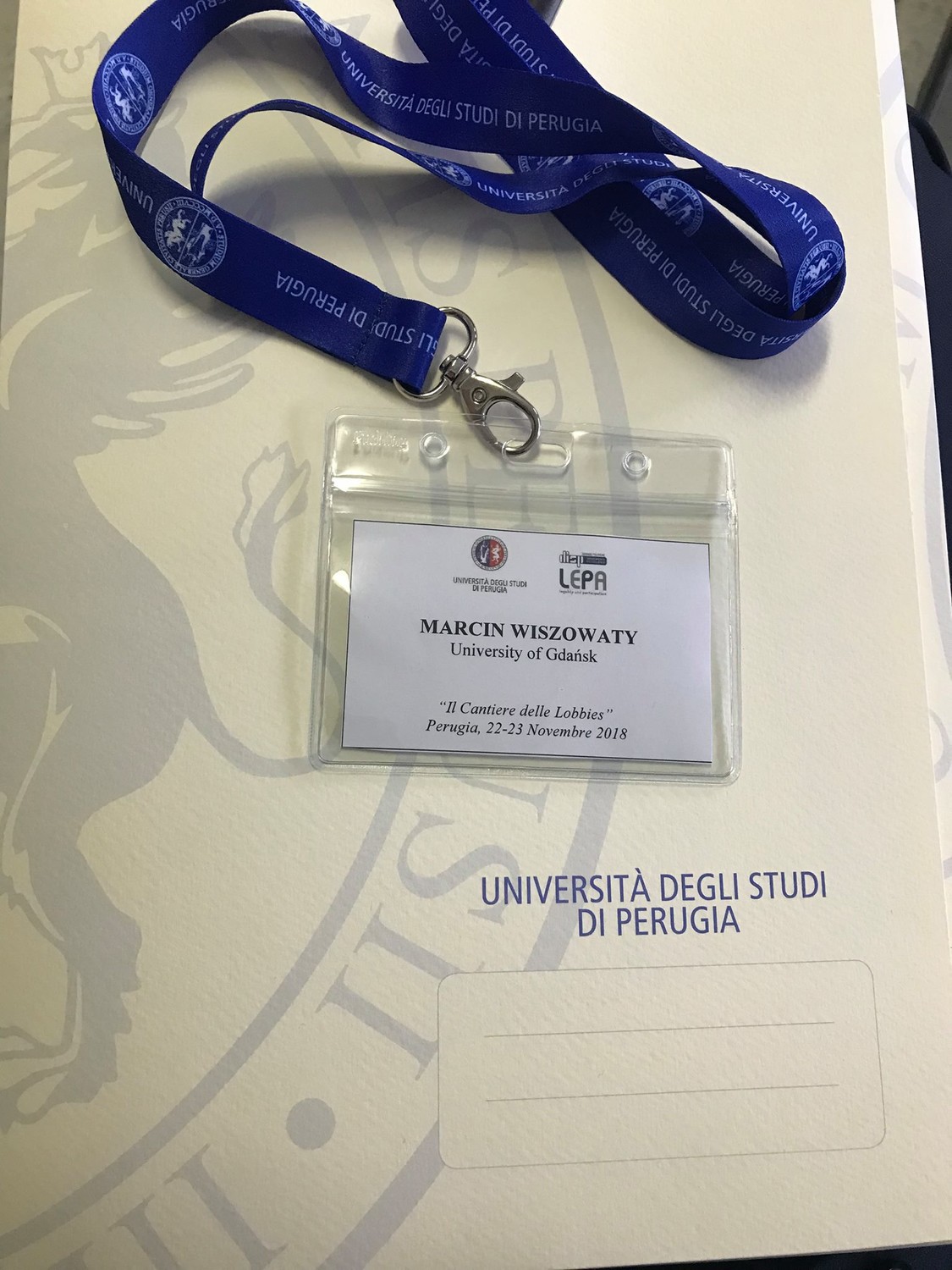
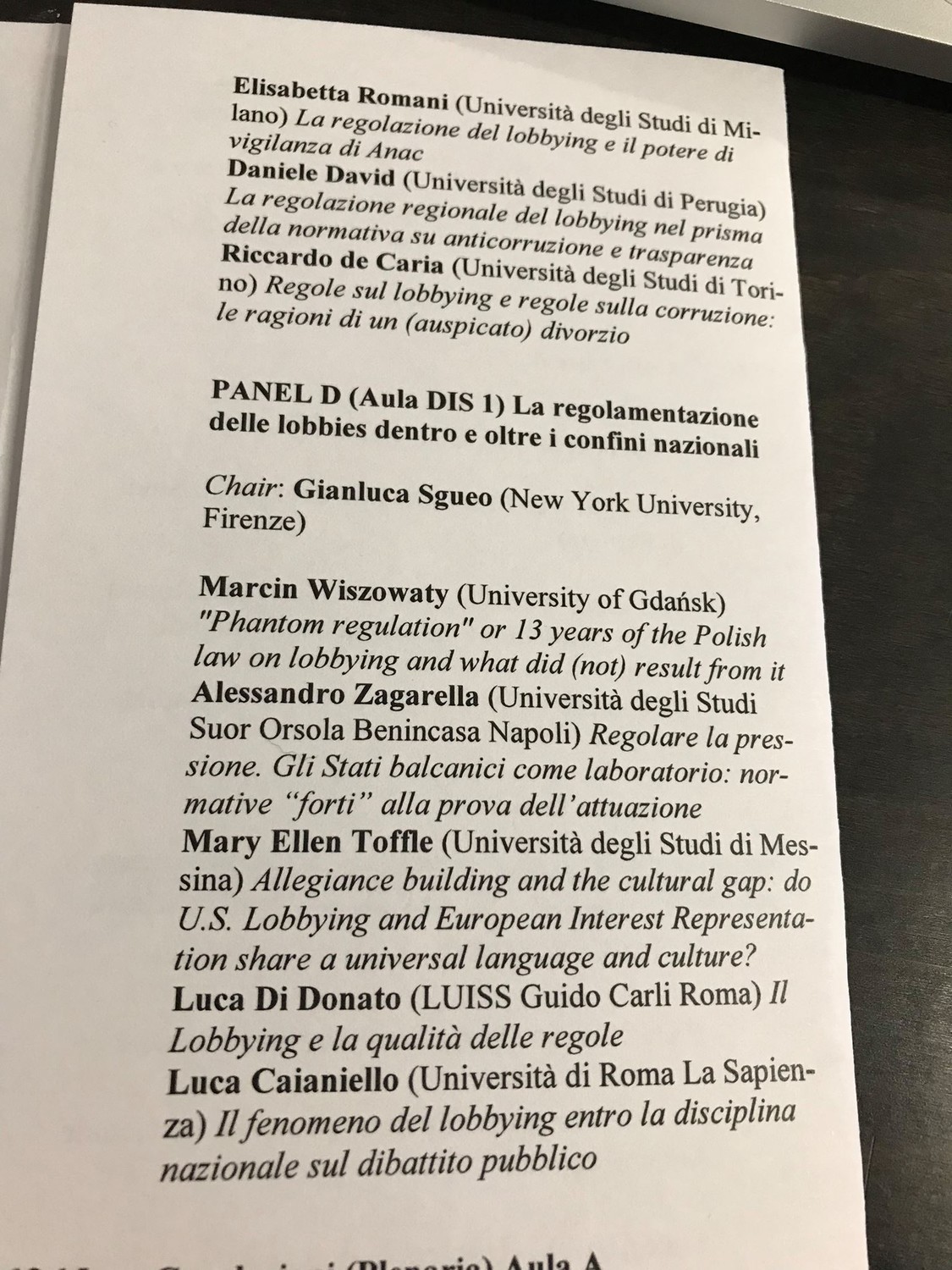
First, an interesting observation from the conference on lobbying organized at the University of Perugia („Il Cantiere delle Lobbies”, Università degli Studi di Perugia, 22-23 November 2018).
Well – in Italy it is different than in Poland, where the chairman of the panel is usually limited to giving voice and reminding that the time of the speach is coming to an end, or giving the floor to the audience during the discussion. In Poland, the written text of the speech is not always ready before the presentation, which makes the speech a manifestation of the speaker’s „spontaneous stream of thoughts”. What’s even worse is that the text is printed before the conference and given on the day of the conference to all participants (the worst option: „we did not manage to print it on time”). In the first option – the presentation can be immature, in the second – the discussion and opinions of the listeners will not affect the text. It also happens that after the lecture there is no discussion or statements are unrelated to the topic of the speech.
 In the case of the Italian conference – the speakers were asked to send written versions of their papers (up to 7,000 words, which is slightly more than our Polish „publishing sheet” = 40,000 characters) a month before the conference. I did not know why. I did not know how much time I would receive to deliver my paper. I counted for about 30 minutes, and it turned out that I got 15 (up to 20) minutes. What’s even more interesting – after the lecture (and this was the case for everyone) – the chair of the panel presented his broad commentary on the written paper, asked a few questions, as well as critical remarks – what he disagrees about, what he would change, what he liked, and what was missing. It was very refreshing and inspiring. I was a bit surprised, but I will add – pleasantly surprised (even if I had to defend some of my thesis). An interesting discussion came out of it. Then came the time for questions from the room. It seems that we have exhausted the topic in our conversation so much that the audience felt satisfied.
 I will add that it was not always so nice. There were presentations, after which the chair of the panel was very strict and his critics were very strong. I heard that the day before there had been a regular, sharp quarrel between one of the speakers and another panel chair. It was a very interesting experience for me. There are many advantages of such a model. First of all – it makes sense to work on a draft paper. It is motivating and encouraging to be aware that someone will read the paper and will definitely critically analyze it. Discussion after the lecture encourages the public to speak, but may be a substitute form of questions from the room. In any case – participation in the conference makes sense for both parties – listeners and speakers. Everyone will leave the conference in a sense – being richer. In addition – the organizers agreed that only some of the papers will go to print. The decision will be taken by the chairmen of individual panels, and the comments made during the discussion will allow the speakers to refine their texts even more.
I liked the Italian way very much. I want to try to introduce it in Poland one day. It will not be easy, but it’s definitely worth it.
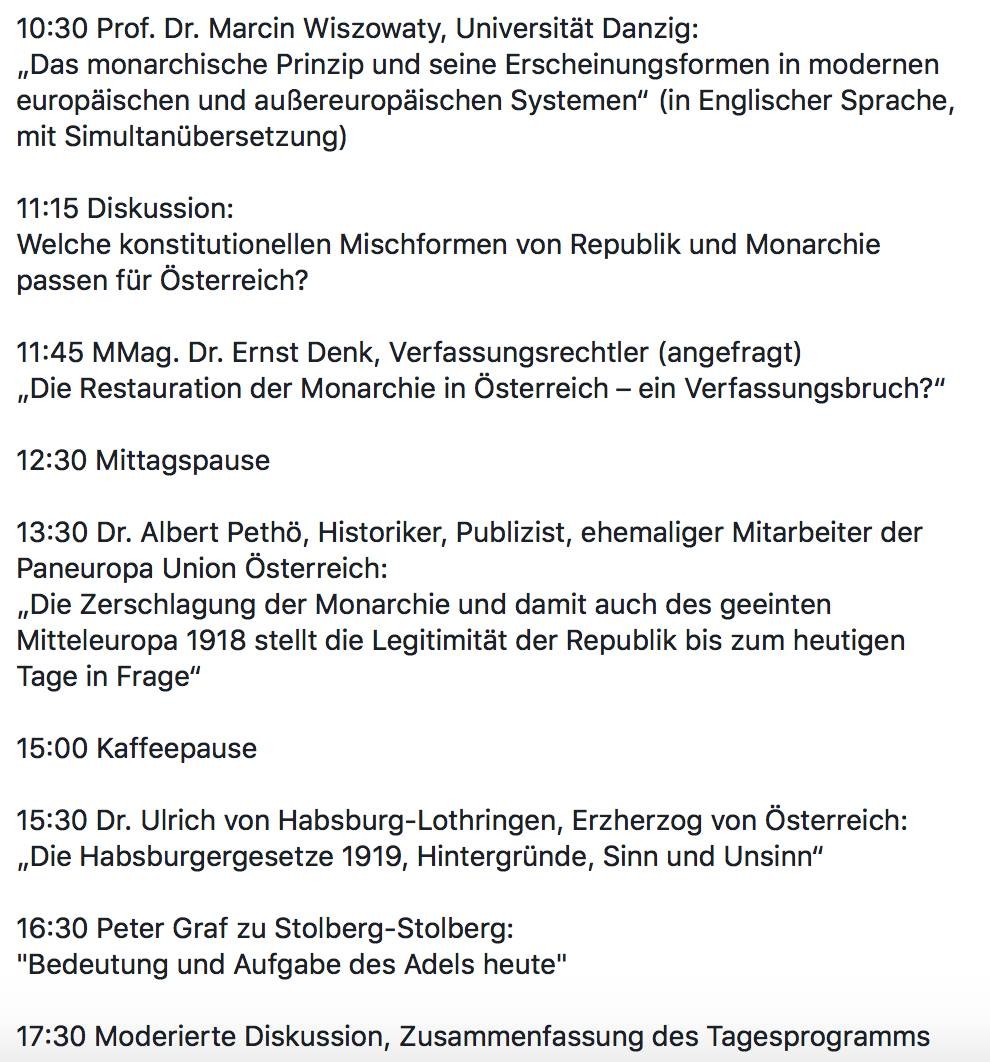 And a brief remark from an earlier conference in Vienna in November – this time about the monarchy. Here I loved the idea that I had never met before. Throughout the conference, one designated person from the host group (scientist) noted the main theses of each speech. Then he consulted them with the speakers and at the very end of the conference – he read his report. What is important – it was not a casual report, but a well thought out and well-selected set of the main theses of each paper (the conference program included 6 long speeches separated by moderated discussions). It took more than 40 minutes to read the report. Thanks to this, each participant of the conference – who came later, left for a moment or listened all the time, but was not able to focus completely for a few hours – could at the end of the day hear once again the most important theses and observations. Interestingly, the report also included a summary of the audience’s questions during the discussion after the lectures. It is a difficult task to draw up such a good, meaningful report and a very valuable initiative – also worth introducing.