CZAS PRZECZYTANIA TEKSTU: 12 minut(y) / READING TIME: 12 minutes
During the period indicated in the title (reminder: the time interval is due to the fact that, thanks to it, one can usually already get access to the full texts) 53 journals had their new editions, including four – double issues. Here is a brief overview of the texts (as usual +/- 10) that I have selected and recommend to the attention of readers. This time – 1 Spanish, 3 American, 3 British and 3 South American (Chilean and Mexican). You are very welcome to read and comment.
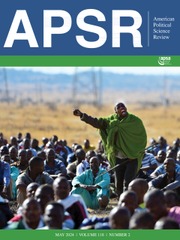 The research presented by the authors of the paper: Rationalizing Democracy: The Perceptual Bias and (Un)Democratic Behavior leads to disturbing results for democracy: a significant proportion of ordinary citizens are inconsistent and biased in their assessment of politicians’ behavior. They tend to rationalize their perception of what is democratic and undemocratic in order to „gain politically and feel democratic at the same time” – even in cases where the two are mutually exclusive. Citizens go so far as to consider even the undemocratic behavior of a politician with whom they politically agree as more democratic than the completely normal and democratic behavior of another politician with whom they politically disagree. Such patterns of behavior have been reported not only in the United States, but around the world (the study covered the United States and 22 democracies around the world). Democratic rationalization seems to be a universal feature of contemporary democratic politics.
The results of this research also point to another important feature of democratic politics. People don’t just rationalize undemocratic behavior. They can do this even in the face of completely correct behavior. Citizens often consider behavior – which does not violate any democratic principles and norms – to be undemocratic if they do not agree with it politically. Political disputes are not only seen as an expression of opposing political views, but they often intersect our ideas about what constitutes the proper democratic rules of the game. In many ways, this is equally troubling from a democratic point of view. In today’s politics, we are so adamant in our political beliefs that we tend to delegitimize opposing views, viewing them as undemocratic – even when they are not.
The authors try to understand why citizens behave the way they do. People often do not give up democracy in a calculated way – to gain politically. They prefer to believe that they are dealing with democracy and the policies they prefer. They accept undemocratic behavior because they do not perceive such behavior as undemocratic. The challenges we face in many democracies are therefore more serious than previously thought, because citizens do not even agree on when certain behavior violates the democratic rules of the game. When democratic violations are indisputably obvious, many citizens find ways not to see undemocratic behavior as undemocratic if they agree with it politically. This may be one explanation for why democratically elected leaders in today’s democracies so often get away with violating democracy without facing electoral backlash. Detailed research results available in: AMERICAN POLITICAL SCIENCE REVIEW (Volume 117 Issue 2).
 In the June issue of EUROPEAN CONSTITUTIONAL LAW REVIEW I found a review which, due to the subject matter and the fact that it covers as many as three books, took the form of a solid review article with a very in-depth analysis of the problem. And this problem is one of the most fundamental issues for the theory of constitutional law, the so-called Constituent Power or Pouvoir Constituant. The author of the review analyzes three books published recently by Oxford and Cambridge publishing houses on this topic. The first, by historian of political thought Lucia Rubinelli, presents the different uses and meanings that have been given to the concept of constituent power since the late 18th century. In his book, Joel Colón-Ríos seeks to develop a particular understanding of constitutional power in its relationship to law. The third author, Markus Patberg, is a political theorist who in his book presents his own original theory of supranational constitutional power in order to formulate the direction of the development of the European Union in a more democratic direction. Reading an erudite review in which the author tries to critically address the main theses of three books and creatively compare them gives a lot of satisfaction and new information. For example, it turns out that the concept whose formulation is attributed to Emanuel Sieyès was re-read by Carl Schmitt in close connection with his own concepts of sovereign power, which he saw in a strong president. In reading Sieyès’s concept, Schmitt omitted elements that did not fit his theses, which, however, also influenced the reception of the idea of constituent power by later authors. Rubinelli argues, among other things, that Hannah Arendt, when criticizing Sieyès’ idea of constituent power, read it through the prism of Schmitt’s statements. Paradoxically, she criticized Sieyès’s concept – in fact an alternative to the concept of sovereign popular power – although she should have directed her criticism at Schmitt’s interpretation, in which probably… Sieyès would support her. Colón Ríos argues, among other things, that the concepts of constituent and constituted power were already used by J. J. Rousseau, although in a limited and legally mediated form. The author extends his analysis of the development of this concept at the turn of the 18th and 19th centuries to include elements such as the imperative mandate and the problem of assigning constituent power to the „nation” rather than to the „people”. Patberg, referring to the constituent power at the level of the European Union, builds the concept of „higher level” constituent power. In his opinion, the entity of constitutent power at the European level should include „citizens down to the very bottom” (in their dual role as both – citizens of their own states and European citizens), and at the same time there should be an institutionalization of such higher-level constituent power in the form of a permanent elected constitutional assembly through official electoral mechanisms. I recommend reading at least an inspiring review (Towards an Institutionalist Vision of Constituent Power?). I must admit that she encouraged me to read all the reviewed books.
 The problem of the interpretative judgments of the Constitutional Tribunal (also known in the practice of the Polish Tribunal) under the Spanish Constitution and the Tribunal Act is discussed in the article Las sentencias interpretativas del Tribunal Constitucional y su relación con el art. 55.2 de la Ley Orgánica del Tribunal Constitucional published in the June issue of ANUARIO IBEROAMERICANO DE JUSTICIA CONSTITUCIONAL (No. 27(1), enero/junio 2023). In Spain, unlike in Poland, citizens do not have the possibility to directly challenge the constitutionality of laws. The Spanish variant of the institution of constitutional complaint only allows an individual to turn to the Constitutional Tribunal for protection of certain rights and freedoms in the event of their violation, after exhausting the ordinary judicial procedure, i.e. after unsuccessfully seeking protection of rights from the ordinary courts. The issue of the unconstitutionality of a provision cannot be the subject of a complaint. This allegation can only be raised at the plenary session of the Tribunal considering the complaint in question. As a result, there may exceptionally be a ruling by the Tribunal on the unconstitutionality of the norm in question (although there are authors in Spanish doctrine who consider this an overstepping of the Tribunal’s authority). The Tribunal can rule on the unconstitutionality of norms, but on the basis of requests for abstract control of constitutionality submitted by bodies designated in the Constitution.
As in other countries where the Constitutional Tribunal has been established, doubts have been raised in Spain about the legal basis for the Tribunal’s abrogation of legal norms created by other powers, led by Parliament. As a result, so-called interpretive rulings have also appeared in the practice of the Spanish Tribunal. It takes one of two forms – the first one indicates such an interpretation of a given norm that is constitutional (in contrast to the others) or the second – the one that is unconstitutional (again, in contrast to the others). The emergence of interpretive judgments in tribunal practice has stirred controversy. Some authors who are critical of interpretive judgments believe that the Tribunal has no right to issue them and that they constitute a violation of the authority vested in ordinary courts to interpret the Constitution freely (it imposes on them the result of interpretation). In addition – the imposition of a particular interpretation of a given norm is, in a sense, the exercise of a lawmaking function that the Tribunal does not have. Of a different opinion are the authors who argue that interpretive judgments are a consequence of the principle of preservation of laws and result precisely from respect for the principle of separation of powers and the minimization of cases where the Tribunal acts as a „negative legislator”, i.e., it is evidence of the Tribunal’s self-limitation and not of its exceeding powers. In addition – interpretive rulings support the day-to-day activities of the courts by making it easier for them to apply the law. For details, see the recommended article.
 It turns out that Poland is not the only country facing a crisis in the Constitutional Tribunal. According to authors of the paper „Constitutional crisis: intensifying disobedience to the decisions of the Indonesian Constitutional Court” published in REVISTA CHILENA DE DERECHO (vol.50 no.2) – a similar crisis in Indonesia appears to have taken on much more serious proportions. It now manifests itself in the increasing disregard of the Tribunal’s rulings by the organs of the other authorities, as well as the Supreme Court. Among the causes and manifestations of the crisis, several developments in recent constitutional practice are mentioned in particular. In 2020. The Tribunal declared the Job Creation act conditionally unconstitutional for failing to ensure full democratic public participation in the creation of the law, and ordered it to be revised accordingly within two years. In response, the President, using his power to issue acts with the force of law in emergency situations, issued a similar act in the form of a decree with the force of law, and parliament approved it. In addition, the parliament dismissed one of the Tribunal’s judges, even though none of the prerequisites for dismissal (turning 70, resignation, final prison sentence, serious violation of judicial ethics) had been met. The authors show in detail the successive stages of the growing crisis and proposes solutions to rectify the current situation and restore the state of affairs in accordance with the Constitution. Among them are proposals such as the establishment of a grace period for the execution of Constitutional Tribunal rulings, the application of criminal and administrative sanctions against those who evade the execution of Constitutional Tribunal rulings, the application of disciplinary and ethical responsibility to acts of disobedience to Constitutional Tribunal rulings as behavior inconsistent with the principles of professionalism.
 BRITISH JOURNAL OF POLITICAL SCIENCE (Volume 53 Issue 2) As usual, it contains many interesting studies, which makes it much more difficult to make a choice. In the end, I decided to recommend two papers.
The first („Learning the Brexit Lesson? Shifting Support for Direct Democracy in Germany in the Aftermath of the Brexit Referendum”) is the result of interesting research on the reasons for the decline in support for the institution of direct democracy in Germany after 2016. The authors demonstrate that support for direct democracy can be instrumental and linked to certain political views. In the case at hand, they examined the impact that the Brexit referendum result had on the opinions of politically conscious Germans who are supporters of European integration. It turns out that in this group, support for the idea of the referendum dropped significantly. The authors confirmed three hypotheses: that after the Brexit referendum, the change in support for the introduction of referendums in Germany depends on individual attitudes toward EU integration, that after the Brexit referendum those with favorable attitudes toward EU integration become less likely to support the introduction of referendums in Germany, that the described relationship is stronger among the politically knowledgeable. In addition, a significant decline in support for referendums among liberal-left voters can be noted. The authors demonstrate that procedural preferences can, in today’s internationalized information environment, be shaped by high-profile events abroad. The relationship explored relates to the referendum, but may also apply, for example, to planned electoral reforms or the formation of small deliberative groups.
The second recommended study deals with the consequences of political involvement of religious leaders (hierarchs, priests). The negative results of such involvement of Christian hierarchs have already been confirmed in studies. Authors of the paper „Preaching Politics: How Politicization Undermines Religious Authority in the Middle East”decided to investigate whether this principle also applies to Muslim clerics in the Middle East. It turns out that it does. Interestingly – the political preferences of the faithful do not matter significantly – even if the faithful share the political views of the cleric, they believe that his political involvement negatively affects the preached religion.
 The original concept of „generations of human rights” provides for their division into 3 generations. For more than a dozen years, the existence of a 4th generation has been signaled in the scientific literature. Interestingly, different authors define this alleged new generation quite differently and include other rights in it. For example – for some authors these are minority rights. For others – minorities, but only sexual minorities. Article by five Ukrainian authors La cuarta generación de derechos humanos: normas europeas y experiencia nacional published in the Mexican legal journal BOLETÍN MEXICANO DE DERECHO COMPARADO (número 167), refers to the latest statements of the doctrine of constitutional law on the fourth generation of rights, includes a proposed list of them, and extensively discusses their specifics in the conditions of Ukrainian constitutionalism against the background of literature and international jurisprudence. The authors believe that the emergence of a new fourth generation of human rights is an objective fact that has many real manifestations. What rights do the authors include in the 4th generation? These include: rights based on the individual’s personal autonomy and control over own body (somatic rights). These can include the right to die, the right to change sex, the right to organ transplantation, the right to artificial insemination and reproductive rights, the prohibition of cloning and the use of genetic material, as well as other opportunities related to bioethics and medicine. Second – rights based on the development of information and communication technologies (information or digital rights). These may include the right to the Internet, the right to anonymity, the right to free access and unhindered dissemination of information, the right to digital personhood, the right to electronic citizenship, the right to be forgotten, etc. I invite you to read this interesting study.
 As you can see, this review is clearly dominated by Spanish-language periodicals. Another, also a Mexican journal („CUESTIONES CONSTITUCIONALES. REVISTA MEXICANA DE DERECHO CONSTITUCIONAL”), contains a very interesting reflection on the erosion of liberal democracy. The thesis of the crisis itself is in no way novel, original or rare. What is interesting are the manifestations of this crisis pointed out by the authors and the remedy – the need to designate an entirely new separation of powers. Authors of the paper „Disfuncionalidades do modelo institucional liberal: juristocracia e backlash” claim that the symptoms of the aforementioned erosion are juristocracy and backlash. Especially the first phenomenon is interestingly described and fraught. Citing R. Hirschl’s theses from publications from 2007-2014, as well as other authors and their own research, they describe the negatively assessed phenomenon of the strengthening of judicial power, which leads to the advent of de facto „judgeocracy”. According to R. Hirschl, the strengthening of the judiciary’s power occurs for various reasons. It occurs, for example, when representative power wants to avoid the erosion or electoral costs associated with unpopular decisions in a kind of „electoral market.” By transferring political decision-making power to the judiciary, politicians manage to avoid making difficult or potentially unpopular decisions that are part of the public task to which they were appointed by voters. The empowerment of judges is also the result of strategic interaction between economic, social and political elites and judicial elites and the country’s higher courts. These elites, having similar interests, determine the timing and degree of constitutional reform. This creates an elite consensus to maintain power hegemony. Such a transfer of power is possible when the reputation of the judiciary and its social legitimacy are high. It can also occur when judicial appointment processes are largely controlled by political and economic elites. In a juristocratic regime, judicial power begins to occupy a space that was previously dominated by elected political actors. The judiciary begins to play a fundamental role in the mechanism of political decision-making. Juristocracy gives precedence to the judiciary in interpreting and determining the meaning of a constitutional norm, and thus strengthens the supremacy of judges, „legitimizing” their proactive stance. Political responsibility for making a particular political decision, especially on controversial issues, shifts from elected political actors to non-elected judges. Hirschl stresses that the transfer of power to the judiciary is attractive to the judiciary and is driven by political, rather than legal, factors. As the judiciary seeks to increase its political influence, this surrender of power to the judiciary, resulting from political and extra-legal factors, ends up depriving citizens of their democratic right to participate in political decision-making. This results in the gradual weakening of the democratic regime, which eventually gradually turns into a juristocratic regime. The broad constitutionalization of human rights, which characterizes modern constitutionalism, has proven to be an effective institutional solution for the political, economic and social elite to defend their interests. Through the process of constitutionalization, these elites can seek to maintain their hegemony and set strategies so that their popularity is not based on the ultimate political decisions of the majority. In this way, juristocracy prevents the people from governing themselves through their elected representatives, weakening the power of the people and anesthetizing state power.
 The complex history of the constitutional regulation of abortion prohibition in Ireland involving two constitutional amendments and four referendums is the subject of an paper „Constitutionalising Abortion: Consequences for Politics and Policy”
The author analyzes in detail the events over nearly 40 years from the 1981 political campaign and the 1983 referendum that resulted in the constitutional ban on abortion, to 2018 when the ban was lifted. According to the author, this history proves that the initiative to establish a permanent ban on abortion has failed. In her opinion, if it had stayed with regulations at the statutory level (which preceded the constitutional amendment), the ban could still be in effect today, at least partly. Meanwhile, it was lifted in 2018, and as early as the late 1980s a marked increase in abortions performed by Irish citizens in the UK and the Netherlands was noted. What is surprising about the Irish story is the surrender of the field by political parties to social organizations and movements and the complete lack of listening by politicians to the changing public mood. Politicians, in her opinion, gave the impression that they were content to disengage from debating a politically difficult issue and let accidents play out alongside them, as it were. The addition of a highly politicized issue to the constitution in a version that conformed to one party’s political agenda prompted other parties and circles to try and push for other heavily politically tinged issues to be written into the constitution. This interesting analysis appeared in KING’S LAW JOURNAL (Volume 34, Issue 2)
 Interesting research on parliamentary staff was published in LEGISLATIVE STUDIES QUARTERLY (Volume 48, Issue 2). Author of the paper „The Institution’s Knowledge: Congressional Staff Experience and Committee Productivity” analyzes the relationship between the level of productivity of U.S. Senate committees and the experience of their staff and presents the results of her research. The question of whether the experience of Senate committee staff translates into committee productivity seems trivial and the answer obvious. Yet the answer is not obvious at all. The average seniority of committee staff in years is an important factor in the legislative effectiveness of a committee. However, research has shown that higher levels of staff experience only increase committee effectiveness for senior staff or high-ranking staff. Meanwhile, as the experience of non-senior staff increases – committees become less effective. These findings suggest that when making staffing decisions to achieve higher levels of committee productivity, priority should be given to years of experience only for senior staff, forgoing the hiring of experienced general and administrative staff.
 How do you distinguish between a high-quality democracy and a medium- or low-quality democracy? Every constitutionalist and political scientist is sure to list at least several factors that can be considered as proxies for the quality of democracy. In the pages of the May issue POLITICAL STUDIES (Volume 71 Issue 2) we find an interesting article touching on this issue. The authors, referring to research and literature on the subject, state that citizens who voted for the party that won the election are usually more satisfied with democracy than those whose candidates did not win. More recently, it was discovered that the difference between winners and losers varies according to the quality of democracy . The higher the quality of democracy, the smaller the difference between satisfaction and dissatisfaction. However, it is unclear what drives this relationship. Is it more influenced by the reaction of losers or winners, or perhaps both? Authors of the paper: „Winning, Losing, and the Quality of Democracy” formulate an answer to these questions on the basis of the findings of the scientific literature on motivated reasoning and using the „Comparative Study of Electoral Systems” project – covering 163 elections in 51 countries between 1996 and 2018. On this basis, they argue that the narrower gap between winners and losers in well-established electoral democracies is due not only to the fact that losers are more satisfied with democracy, but also to the fact that winners are less satisfied with their victory. The small gap between winners and losers appears to be another key feature of healthy democratic systems.